

🔌 When your job feels like your whole identity
Max Pete on layoffs, building community without burning out, and giving yourself permission to just be


Welcome back to Real Recharge Stories—an interview series featuring people who’ve navigated burnout and the roadmaps they’ve used to come home to themselves. Want to share your story? Let me know! I’d love to chat. 💌
Looking for more inspo? Catch up on earlier conversations with Simran Sidhu, Mary Jantsch, and Vivian Delgado Babin (Nunez).



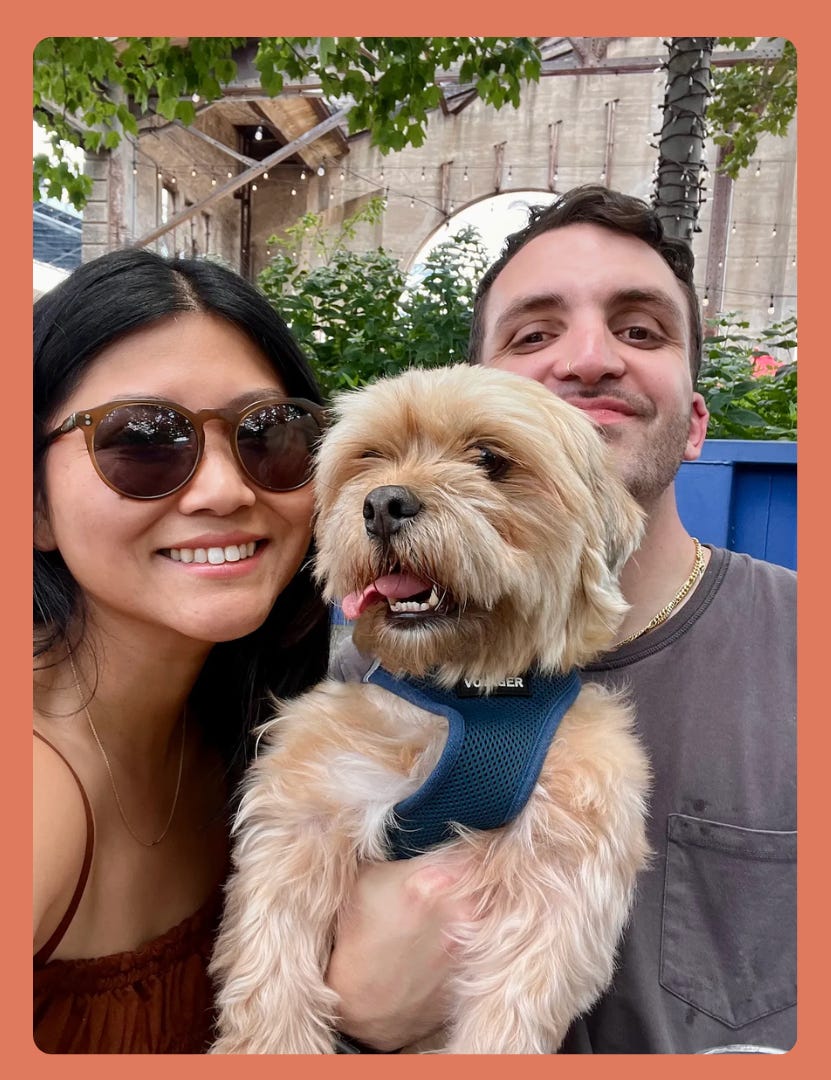
I’m SO excited about this week’s guest: the one and only Max Pete (who writes Max’s Newsletter here on Substack).
He’s one of those humans who’s just wonderful… and I can’t even remember how we know each other. LinkedIn, I think? Either way, he’s been such a great sounding board for me these past few years, and I always appreciate his thoughtful, human-first perspective. My hunch is that you will, too.
Keep reading for Max’s thoughts on things like:
Realizing you’re more than enough, even when you’re not doing or being productive
Making your career your identity — and what it costs you
Protecting your nervous system in an “always on” field
Building community and networking without burning out
Giving yourself permission to change course when something’s no longer serving you
Doing less, but more authentically
His love of Trader Joe’s (jk—it only came up twice, which I’m shocked about)
As always, thank you for being here and for reading.
P.S. My usual disclaimer: Substack is telling me this post is too long for email—so if it gets cut off, please try viewing it in your browser or in the app.

👋 Part 1: Meet Max
Tell us a little about who you are!
I’m Max, though some people know me as the One-Hand Wonder Man. I was born on the East Coast and spent a good chunk of my life in California, but I recently moved back to Philly with my wife, Celeste, and our dog Deon. We get some pretty wild looks when people find out we traded San Diego for the Northeast, but being near family and finally buying our own home were the priorities for us.
When I’m not working, I’m usually writing, reading, or leaning into my music roots as an amateur DJ. I’ve always felt like I contain a lot of different layers, so I try to make time for all of them. Whether it’s neighborhood projects or creative ones, I’m usually looking for ways to stay grounded in the place I live.
What are some of your favorite things?
I’m a big fan of Trader Joe’s and iced Americanos (I’ll drink them even when it’s freezing outside). Getting out for walks around the neighborhood is huge for me, along with just being with my family.
I’m also a drummer, so music is a massive part of my life. Whether I'm going to shows or obsessively curating playlists, it’s what brings me the most joy.
I definitely want to travel more too; some of my best memories are from Mexico City, St. Lucia, and a trip to Prague, where I got to speak.


What does your elevator pitch sound like these days?
I help people realize they are more than enough through community building and a sense of belonging.
[Editor’s note: Obsessed with this elevator pitch!]
Can you walk us through your career trajectory? What about it has been nonlinear or surprised you?
My path has been anything but a straight line. I started in the music industry and honestly thought I’d be there until I retired. But when I was 25, my Mum passed away unexpectedly, and it completely shifted my perspective on what matters. I quit that job and spent over five years freelancing in web design and marketing.
By the time the pandemic hit, I was busier than ever because everyone needed a website, but I ended up burning myself out by saying yes to everything. I tried business coaching and consulting for a while before accidentally falling into community building.
Six years later, I’ve worked for two publicly traded companies, which is something I never would have predicted for myself back when I was just trying to survive as a freelancer.
Speaking of saying yes to everything, I love the way you phrased this: “Saying yes to every project comes at a price, and that price is burnout.” How did you figure out what to say no to?
It came from pure exhaustion and a few hard lessons. I used to go above and beyond in every single role, thinking that if I was indispensable, I’d be safe. Then I still got laid off. That experience was a wake-up call: you can give everything you have to a company, and it still might not matter in the end.
It’s up to you to set your own capacity and stick to it because nobody else is going to do it for you. People and companies will take as much as you’re willing to give until there’s nothing left. Once you get strict about your boundaries and realize that “no” is a tool for survival, things get a lot clearer. You start protecting your peace because you realize how expensive it is to lose it.
I used to go above and beyond in every single role, thinking that if I was indispensable, I’d be safe. Then I still got laid off. That experience was a wake-up call: you can give everything you have to a company, and it still might not matter in the end.

❤️🔥 Part 2: All things burnout & recovery
You wrote a fantastic piece about the tech dream being a nightmare. Can you tell us about your experience working in tech—and how it contributed to burnout, if at all?
I think for a long time, I bought into the idea that landing a role at a big tech company was the ultimate goal. We’re told that if you make it there, you’ve arrived.
But the reality of it often feels more like being on a treadmill that’s set just a little bit too fast. You’re constantly chasing metrics, navigating reorgs, and dealing with the pressure to be innovative every single second of the day. For me, that pressure started to bleed into my personal life until there was no distinction between who I was and what my job title was.
The burnout didn’t happen all at once; it was a slow erosion. It was the always-on culture where a notification at 8:00 p.m. felt like an emergency, and the feeling that if I wasn’t constantly networking or upskilling, I was becoming obsolete. I realized that the tech dream often requires you to sacrifice your nervous system for the sake of scale. It’s hard to feel like you’re building a community when you’re actually just exhausted and staring at a screen for ten hours a day.
Eventually, I had to step back and ask myself what I was actually working toward. I realized that no amount of stock options or prestige was worth the way I was feeling. Now, I look at tech through a much more objective lens. It’s a tool and a sector, but it isn’t my identity. Getting to that realization was painful, but it’s what allowed me to start building a career that actually leaves room for me to breathe.
I realized that the tech dream often requires you to sacrifice your nervous system for the sake of scale.
What led to your decision to leave your most recent job, and was it difficult?
It really came down to realizing I was done with startup life. I loved that fast pace when I was in my 20s, but now that I’m 36, I know it just isn’t for me anymore. Moving from a team of 13 at Square to being a team of one at Origin was a huge adjustment. I’m grateful for what I learned and the people I worked with, but I knew I had outgrown that environment. It feels wild to job hop in this current market, but after going through two back-to-back layoffs, you realize you have to do what’s best for yourself.
It feels wild to job hop in this current market, but after going through two back-to-back layoffs, you realize you have to do what’s best for yourself.
Your piece on the pressure to always be “on” was SO relatable. What are the real costs of staying perpetually online? What are you sacrificing?
I get this heavy sense of overwhelm when I’m online too much. I start overthinking everything and comparing my life to what everyone else is doing. It makes me feel like I’m not enough, and I just start to spiral into this feeling that I’m falling behind, even when I don’t know what I’m supposed to be racing toward.
The internet is great for connecting with people, but there has to be a balance. You have to know when to log off and just be a person in a room. You will miss things, and you won’t always be in the loop, but that has to be okay. I have to keep reminding myself that what is meant for me won’t miss me, no matter how long I stay offline.
I have to keep reminding myself that what is meant for me won’t miss me, no matter how long I stay offline.
To that point, you’ve been writing “Sunday Thoughts” for 3+ years. How’d you decide to take a break?
That series started while I was sitting in a Trader Joe’s parking lot waiting for them to open, right in the middle of my first layoff. I just wrote what was on my mind, and it stuck. I’m a big fan of consistency, sometimes to a fault. I’ve always been the type to show up and do the work, so I took pride in that weekly rhythm for a long time.
But after three years without missing a single week, I realized it had turned into an obligation. I was doing it because I felt like I had to maintain the streak, not because it was bringing me joy or clarity. Taking a break was hard because it felt like I was breaking a promise to myself, but I’m glad I finally gave myself the space to just exist without the pressure to turn every Sunday into a deliverable.
Taking a break was hard because it felt like I was breaking a promise to myself, but I’m glad I finally gave myself the space to just exist without the pressure to turn every Sunday into a deliverable.
You’ve been open about anxiety and the feeling of “not doing enough.” Any tips for someone who’s caught in that loop but also wants to be kind to themselves?
I still struggle with this on a regular basis. Being vocal about it is the only thing that really helps me. When I am stuck in an anxious spiral, talking to Celeste usually helps me get out of my head and start to see things from a different perspective. It is hard to see the reality of your progress when you are only looking at it through a lens of anxiety.
I also try to practice a bit of perspective shifting by thinking about what I would say to a friend in the same position. I have found that I am often way kinder to my friends than I am to myself. When those thoughts come up, I try to remember that they are just passing thoughts that do not have to have a hold on me.
Using the How We Feel app to track my emotions has been a big help with this, too, because it helps me see the patterns and realize that the feeling is temporary.
What routines, rhythms, or rituals helped you move through burnout?
Getting back into the real world as much as possible is key. For me, that means long walks, hanging out with friends and family away from the computer, cooking, and journaling. When I’m burnt out, it’s almost always because I’ve spent too much time behind a screen. Stepping away is the only way I can recharge and feel like myself again.


What’s one common misconception about burnout that you’d push back on?
The idea that there is a one-size-fits-all solution. There is so much advice out there trying to sell you a specific technique, but it really depends on the person. For me, being outside works wonders, but that might not be the answer for someone else. We get too stuck on black-and-white advice and forget that everyone’s situation has its own nuances.

🔨 Part 3: Building Your Career Without Burning Out
You’ve helped a lot of people rethink what “work” even means. How has your own definition evolved?
As I get older, I’ve realized I just don’t have that same hustle energy, and I don’t want it back. I used to think working 24/7 was a badge of honor and that being busy meant I was important. Now, I’m focused on how to work less and live more. I still want to do good work and make an impact, but I’m no longer willing to hurt myself to do it.
I’d much rather have three or four meaningful hours of work where I’m actually locked in and then go live my life. I want to spend time with my wife, walk my dog, and work on my house. There is so much more to who I am than what I do for a paycheck.
I used to think working 24/7 was a badge of honor and that being busy meant I was important. Now, I’m focused on how to work less and live more. I still want to do good work and make an impact, but I’m no longer willing to hurt myself to do it.
We all know you’re the king of community. What tips do you have for someone looking to grow their network without burning out in the process?
Just have fun with it. I only reach out to people when I’m actually interested in what they’re doing and want to support them. If you treat networking like a chore or a box you have to check to get a job, it is going to drain you before you even start.
I think people get caught up in the strategy of it all and forget that it is really just about making a friend or finding a peer. If you don’t feel like talking to people, then don’t. Forced connection never feels good for anyone involved, and people can usually tell when you are not being authentic.
I am a big believer in the compounding effect of just being a decent, curious person over time. You don’t need to go on a networking sprint where you talk to twenty people in a week. That is a fast track to burnout, and it makes the whole process feel robotic. Start with one person a month and see how it feels. Maybe that turns into one person every two weeks. You don’t have to match anyone else’s intensity to be successful at this.
The best connections I’ve made happened because I reached out with zero agenda other than saying I like what you are doing. When you approach it from a place of genuine support rather than “what can I get out of this,” the pressure disappears. It stops being a task on your to-do list and starts being a part of your life that actually gives you energy instead of taking it away.
When you approach it from a place of genuine support rather than “what can I get out of this,” the pressure disappears. It stops being a task on your to-do list and starts being a part of your life that actually gives you energy instead of taking it away.
You’ve written about not needing a personal brand. How are you thinking about that now—especially as someone who writes publicly and works in community?
Personal brand is such a loud topic right now. Everyone says you need one to get a job, make money, or find clients, and that message makes people feel bad if they aren’t naturally inclined to put themselves out there that way.
The truth is, you do not need a personal brand to be successful or to have a fulfilling career. It can certainly help, and it often does, but we miss so much nuance when we tell people there is only one correct way of doing things.
I share my story and write publicly because I actually enjoy the process. For me, it is more about the fun of connecting than it is about building a marketing funnel. If my writing leads to an opportunity, then that is great, but that is not why I am doing it. I am doing it because I like it. That is the key to all of this. If you force yourself to build a brand just because you think you have to, it will eventually feel like another job you want to quit.
I think we should give ourselves more permission to just be people who do good work without needing to turn our entire lives into a curated presence. When you focus on being helpful and doing things that bring you joy, a reputation builds itself naturally. That feels much more sustainable and honest to me than trying to maintain a brand at the expense of my nervous system.
My advice is to show up in a way that works for your actual life and your actual nervous system. If that’s five minutes a day or once a month, that’s plenty.
I think we should give ourselves more permission to just be people who do good work without needing to turn our entire lives into a curated presence.
For anyone in the thick of it, trying to figure out what to do next—what would you tell them?
Take your time and trust the process, even when it feels like nothing is happening. I’m in the messy middle right now, too, and I have to remind myself that things usually work out when you least expect them to. It’s easy to panic when you don’t have the next five years mapped out, but the best parts of my life have usually come from the pivots I didn’t see coming.
I never could have planned a path from music to freelancing to community building, but looking back, it all makes sense. Keep making the moves you need to make, keep talking to people, and keep sharing your story. It might not feel like it today, but you’re building something. It usually turns out better than you ever imagined once you stop trying to force the timing.
Any favorite Substack accounts you recommend people check out/subscribe to?
Okay, well, can I put you because you are one!1
Others include: Renee, Seth Werkheiser, Julie Laufer, Christina Le, and Carly Valancy (subscribe below!).


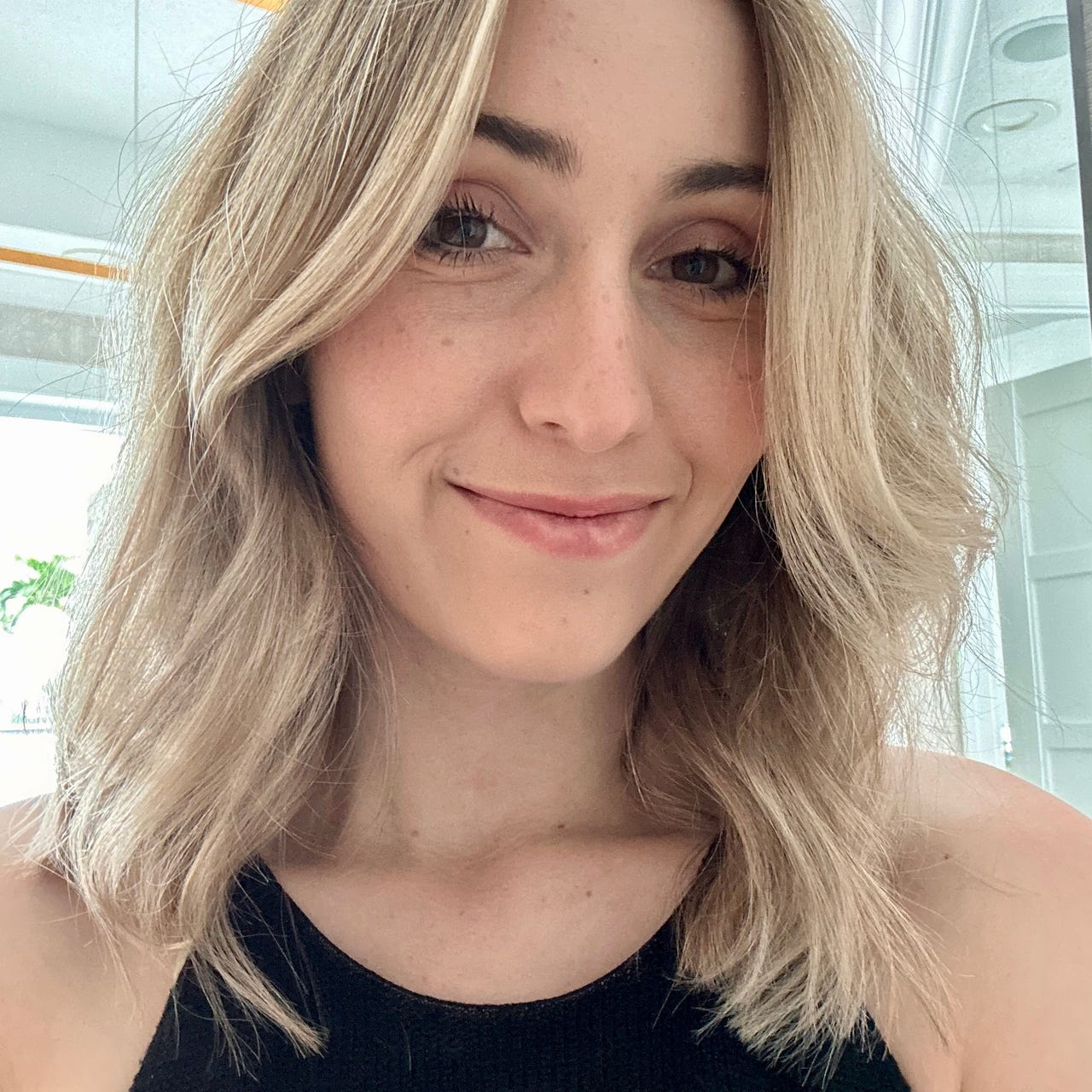

You can find Max right here on Substack, and connect with him over on LinkedIn.

This is so kind, and I SWEAR I’m not fishing for compliments when I ask this question!!!
 | A guest post by
|